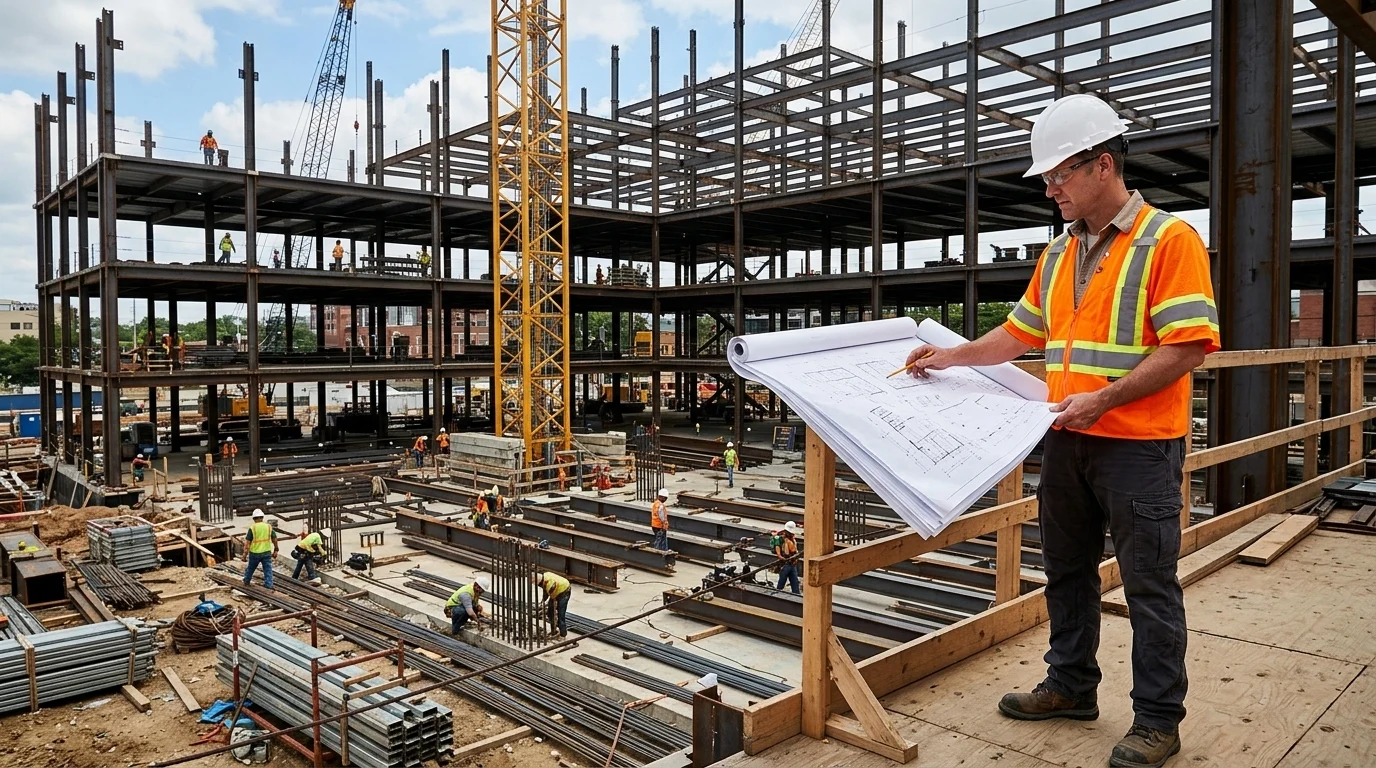
Construction Business Loans: Funding Options for Contractors and Builders

Construction is one of the few industries where being profitable on paper and having cash in the bank are routinely two very different things. A contractor can have a full pipeline of profitable, signed contracts and still struggle to make payroll, because the cash from those contracts often will not arrive for thirty, sixty, or ninety days after the work is completed. This gap between earning revenue and actually collecting it is the defining financial challenge of the construction industry, and it shapes which financing tools genuinely help and which ones just add another obligation to juggle.

This guide covers the specific cash flow pattern construction businesses deal with, the financing options built to address it, and how bonding fits into the broader picture.

The Cash Flow Pattern Unique to Construction

Most construction work follows a pay when paid or pay after milestone structure, where a contractor covers labor, materials, and subcontractor costs upfront, then bills the client or general contractor, then waits for that invoice to clear. On a larger commercial project, this cycle can stretch well past sixty days, during which the contractor still has ongoing payroll, material costs on the next phase, and often multiple projects at different stages simultaneously.

This pattern means a construction business can be growing quickly, taking on more and better contracts, and still face its tightest cash position exactly when things are going well, since growth means more projects in the pipeline all waiting on payment at once. Financing built for this industry needs to address that timing gap specifically, not just provide a lump sum for general use.

Financing Options Built for This Pattern

Invoice factoring for pay when paid gaps

Invoice factoring is particularly well suited to construction, since it directly addresses the gap between completing work and getting paid for it. A factoring company advances a percentage of an approved invoice, commonly 70 percent to 90 percent, immediately, with the remainder released once the client pays, minus a fee. For a contractor waiting on a general contractor’s payment cycle, this can mean covering next week’s payroll without waiting for an invoice that is still forty five days from clearing.

Equipment financing for heavy machinery

Construction is one of the most equipment intensive industries in small business lending, and financing for excavators, loaders, trucks, and other heavy machinery is a well established category with lenders who specialize in exactly this kind of collateral. Because this equipment holds substantial resale value, financing terms are often more favorable than an unsecured alternative, and terms are typically matched to the equipment’s useful life, often five to ten years for heavier machinery.

Lines of credit for job to job flexibility

A line of credit gives a construction business a standing buffer to draw on between projects or to cover the material costs of a new job before the first payment milestone arrives. Because interest accrues only on the amount drawn, a line that sits mostly unused between big draws costs relatively little while remaining available exactly when the timing gap between projects creates pressure.

SBA loans for larger, planned growth

For a construction business investing in a larger equipment fleet, a new facility, or significant working capital to support a major expansion, an SBA backed loan often provides the most favorable long term cost, provided the business has the operating history and documentation to support the longer approval process. This tends to fit planned growth better than the immediate cash flow gaps invoice factoring or a line of credit are built to solve.

Bonding and Financing Are Not the Same Thing

Contractors new to larger commercial or government work sometimes confuse surety bonding with financing, but they solve different problems. A performance bond or payment bond is a guarantee to the project owner that the work will be completed and subcontractors and suppliers will be paid, backed by a surety company, not a source of working capital for the contractor itself. Being bonded can actually make it easier to win larger contracts, but it does not solve the cash flow gap while waiting for those contracts to pay out, which is exactly where financing options like invoice factoring or a line of credit come in as a complement to bonding rather than a substitute for it.

Typical Costs in Construction Financing

Costs vary by product and by how established the contractor is. Invoice factoring fees commonly run 1 percent to 5 percent per 30 day period the invoice remains outstanding, which compounds if a client is slow to pay, making the client’s payment reliability almost as important as your own financial profile when evaluating this option. Equipment financing for heavy machinery commonly carries rates from 7 percent to 20 percent annually, reflecting the strong collateral value of construction equipment. Lines of credit for construction businesses typically range from 10 percent to 26 percent on the drawn balance, depending on the business’s financial profile and banking relationship.

What Strengthens a Construction Financing Application

A documented backlog of signed contracts or a clear pipeline of upcoming work demonstrates predictable future revenue in an industry where lenders know cash flow can be lumpy. Clean documentation of accounts receivable, showing which clients are current and which are past due, matters enormously for invoice factoring specifically, since the factor is really underwriting your client’s ability to pay, not just your own business. A track record of completing projects on time and within budget, while harder to document formally, often comes through in references and past project history that some lenders will ask about directly for larger financing requests.

Common Mistakes in Construction Financing

Relying on a fixed monthly payment product to cover a cash flow gap that is actually tied to project timing, rather than choosing a product like factoring or a line of credit that flexes with when money actually arrives, is one of the more common mismatches in this industry. Financing equipment with a term longer than the equipment’s realistic useful life leaves a contractor still paying for a machine that has already been sold, traded in, or worn out. Underestimating how quickly cash gets absorbed across multiple simultaneous projects, especially during a growth period, catches many contractors off guard exactly when the business is otherwise doing well.

Running the Numbers Before You Commit

Before choosing a financing path, it helps to see the real cost side by side, especially when comparing something like invoice factoring against a line of credit for the same underlying cash flow gap. Our business loan calculators let you compare the actual numbers across these structures so you can choose based on your specific situation rather than a general assumption about which product is cheaper.

Frequently Asked Questions

Can a new construction business get financing without an established track record?

It is more difficult, but not impossible, particularly for equipment financing, where the equipment itself provides collateral that offsets some of the lender’s risk from a shorter operating history. Invoice factoring can also be more accessible to newer contractors since it leans heavily on the client’s creditworthiness rather than the contractor’s own history, provided the client is a solid payer.

Does invoice factoring work for residential contractors, or only commercial and government work?

Factoring is most commonly used for commercial and government contracting, where formal invoicing and longer net payment terms are standard practice. Residential work, which is often paid more quickly and directly by homeowners, generally has less need for factoring, though it can still apply in situations involving larger residential projects billed through a general contractor or property management company on similar payment terms.

How does a lender evaluate a construction business differently from other industries?

Lenders familiar with construction typically look closely at accounts receivable aging, the mix of project types and clients, and how concentrated revenue is among a small number of large clients versus spread across many smaller ones. A heavy reliance on one or two major clients can be viewed as a risk factor even if overall revenue looks strong, since losing a single relationship could significantly affect cash flow.

Is equipment financing available for used or older heavy machinery?

Yes, though terms are generally less favorable than for newer equipment, often with a shorter maximum term, a higher rate, or a larger required down payment, since resale value and remaining useful life are harder to predict confidently for older machinery. Documentation on the equipment’s maintenance history and condition can help support better terms when financing used equipment.

What happens to financing obligations if a major project gets delayed or canceled?

This depends heavily on the specific financing structure. A fixed term loan payment continues regardless of project timing, which is why matching financing type to the actual shape of your cash flow matters so much in this industry. Revenue tied products, like certain lines of credit or factoring arrangements, are generally more resilient to a single delayed project, though a canceled project that was factored can create its own complications depending on the agreement, which is worth understanding fully before signing.

Should a contractor prioritize bonding capacity or financing access when trying to grow?

Both typically matter for meaningful growth into larger contracts, and they work together rather than substituting for each other. Bonding capacity determines what size and type of contracts you can even bid on, while financing access determines whether you can actually manage the cash flow required to execute those contracts once won. A contractor focused only on increasing bonding capacity without a plan for the working capital gap that comes with larger projects often finds the growth harder to sustain than expected.


Equipment Financing for Small Businesses: How It Works and When It Makes Sense

A delivery truck breaks down beyond repair. A restaurant’s walk in cooler finally gives out. A print shop needs a new press to take on a bigger contract. Moments like these share a common shape: the business needs a specific, identifiable piece of equipment, not a general pool of working capital, and the equipment itself has real resale value. That shape is exactly what equipment financing is built around, and it is one of the more misunderstood corners of small business lending.

This guide covers how equipment financing actually works, how it differs from a general term loan, the leasing alternative, and what to check before signing anything.

What Makes Equipment Financing Different

The defining feature of equipment financing is that the equipment being purchased serves as collateral for the loan itself. This changes the underwriting math in a meaningful way. Because the lender has a tangible asset to reclaim and resell if the loan goes unpaid, equipment financing is often easier to qualify for and can carry a lower rate than an unsecured general purpose loan of the same size, even for a business that might not qualify as strongly on revenue or credit alone.

This also means the loan amount is directly tied to the equipment’s value. Lenders typically finance somewhere between 80 percent and 100 percent of the equipment’s purchase price, occasionally including related costs like installation or delivery, with the remainder covered by a down payment if the lender does not offer full financing.

How the Terms Typically Work

Repayment terms are generally matched to the useful life of the equipment being financed rather than a generic loan term. A commercial vehicle might be financed over three to six years, while heavier industrial equipment with a longer useful life might stretch to seven or even ten years. Matching the term to the equipment’s expected lifespan keeps you from still making payments on a machine that has already been replaced or retired.

Rates commonly range from 6 percent to 20 percent annually, with the lower end generally reserved for well established businesses financing newer equipment with strong resale value, and the higher end more common for newer businesses, weaker credit profiles, or used equipment that carries more resale uncertainty.

Financing vs Leasing

Equipment financing and equipment leasing solve a similar problem through different structures, and the right choice depends heavily on how you plan to use the equipment over time.

With financing, you own the equipment once the loan is paid off, and the payments build equity in an asset that stays on your balance sheet. This tends to make more sense for equipment you expect to use for its full useful life, or that holds meaningful resale value when you are eventually done with it.

With leasing, you make regular payments to use the equipment without ever owning it outright, often with an option to purchase it at the end of the lease for a predetermined price. Leasing tends to make more sense for equipment that becomes outdated quickly, such as certain technology or specialized machinery in a fast changing field, since it lets you upgrade at the end of the lease term rather than being stuck owning something that has lost most of its value.

Tax treatment differs between the two structures as well, and this is genuinely worth a conversation with an accountant familiar with your specific situation before deciding, since the right answer depends on your business’s broader tax picture, not just the equipment itself.

What Lenders Actually Look At

Because the equipment itself reduces the lender’s risk, equipment financing underwriting tends to be somewhat more forgiving than a general unsecured loan, but lenders still weigh several factors.

Your business’s cash flow and revenue history, to confirm the new payment fits comfortably within what your business already generates. Time in business, though many equipment lenders accept newer businesses more readily than banks would for an unsecured product, particularly when the equipment itself is common and easy to resell. The age, condition, and type of equipment, since newer, more standard equipment with an established resale market is viewed more favorably than highly specialized or older used equipment. Your personal credit profile, which still factors into the decision even though the loan is secured, particularly for the interest rate you are offered.

New Equipment vs Used Equipment

Financing used equipment is generally possible but often comes with a shorter maximum term, a higher rate, and sometimes a larger required down payment compared to new equipment, since resale value and remaining useful life are harder for a lender to predict confidently. If you are financing used equipment, come prepared with documentation on its condition, age, and any recent maintenance history, since this can meaningfully improve the terms a lender is willing to offer.

What to Check Before You Sign

A few specific details are worth confirming on any equipment financing or lease agreement before you commit.

Whether the rate is fixed or variable. A fixed rate keeps your payment predictable for the full term, while a variable rate can change with broader interest rate movements, which matters more the longer your term runs.

What happens if the equipment is damaged, lost, or becomes obsolete before the loan is paid off. Confirm whether you are required to carry specific insurance coverage on the equipment, and understand what your obligation looks like if something happens to it mid term.

Whether there is a prepayment penalty. If you expect the possibility of paying off the equipment early, whether from a strong revenue year or an early upgrade, confirm this does not carry an unexpected fee.

The end of term terms if it is a lease. Understand exactly what your options are when the lease ends, whether that is returning the equipment, purchasing it at a stated price, or renewing the lease, and what any of those paths actually cost.

Where Equipment Financing Fits Among Other Options

Compared to a general term loan, equipment financing is usually the better choice when the need is specifically a piece of equipment rather than general working capital, since the collateral typically results in better terms than an unsecured alternative. Compared to a merchant cash advance, equipment financing is almost always the lower cost option for this specific purpose, though it moves more slowly and requires more documentation about the equipment itself. If your need extends beyond just the equipment, such as needing working capital alongside the purchase, it is worth considering whether a slightly larger term loan or a separate line of credit might serve the broader need better than stretching equipment financing to cover things it was not designed for.

Before committing to any specific offer, run the numbers through our business loan calculators to see the real monthly payment and total cost, and compare that against your business’s actual cash flow rather than just the sticker price of the equipment.

Frequently Asked Questions

Can a new business get equipment financing without an established credit history?

It is generally more accessible than an unsecured loan for a new business, since the equipment itself serves as collateral, but most lenders still want to see some combination of decent personal credit, a reasonable down payment, or a co signer for a business with very limited history. Expect somewhat tighter terms, such as a higher rate or larger down payment requirement, compared to an established business with a longer track record.

What happens if I cannot make payments on financed equipment?

Because the equipment serves as collateral, a lender typically has the right to repossess it if payments are not made according to the agreement, similar to how an auto loan works. Beyond losing the equipment, missed payments can also affect your business and personal credit depending on how the loan was structured, so review the default terms carefully before signing.

Is it better to put a larger down payment on equipment financing?

A larger down payment generally reduces your monthly payment and total interest cost over the life of the loan, and can sometimes help you qualify for a better rate. Weigh this against your business’s need to preserve cash for other purposes, since tying up too much cash in a down payment can create its own strain even if it saves money on the financing itself.

Can equipment financing be used for software or only physical equipment?

Some lenders do extend equipment financing to certain business software or technology packages, though the terms are often less favorable than for physical equipment, since software typically has little to no resale value to serve as collateral. Confirm directly with a specific lender whether software qualifies under their program before assuming it does.

How quickly can equipment financing actually be approved?

Timelines vary by lender and loan size. Smaller, standard equipment purchases through online lenders can sometimes be approved within one to two business days, while larger or more specialized equipment financing, particularly through a bank, can take one to several weeks depending on the documentation required and the complexity of the equipment involved.

Does the equipment need to be purchased from a specific vendor?

Some lenders have preferred vendor relationships or restrict financing to certain equipment dealers, while others allow you to finance equipment from any seller, including private party purchases in some cases. This varies significantly by lender, so confirm vendor requirements before you commit to a specific piece of equipment if you plan to finance the purchase.

Restaurant Business Loans: Financing Options for Food Service Owners

Few industries put more strain on cash flow than food service. Margins are thin even in a good month, revenue swings with the season and the weather, and a single piece of failed kitchen equipment can shut down service entirely until it is replaced. Lenders know this, and it shapes how restaurant financing actually works in ways that differ meaningfully from general small business lending.

This guide covers the specific financing challenges restaurant owners face, the options best suited to those challenges, and what tends to strengthen or weaken an application in this industry specifically.

Why Restaurants Are Underwritten Differently

Restaurants carry a reputation among lenders as a higher risk category, and the data behind that reputation is not entirely unfair. Thin margins mean less room to absorb a bad month. High failure rates, particularly in the first two years, make time in business a heavily weighted factor. Seasonal swings, whether from tourism, weather, or local events, create revenue patterns that look inconsistent to an automated underwriting model even when the business is fundamentally healthy.

None of this makes restaurant financing impossible, but it does mean the type of lender and the type of product matter more here than in many other industries. A restaurant with strong, well documented cash flow is still a fundable business, but it often needs to work with lenders who understand food service specifically rather than a generic small business lender applying one size fits all criteria.

Financing Options That Fit Restaurant Cash Flow

Equipment financing for kitchen equipment

Ovens, refrigeration units, dishwashers, and other kitchen equipment represent some of the largest capital expenses a restaurant faces, and because this equipment holds real resale value, it is generally one of the more accessible financing types for food service businesses. A failed walk in cooler or oven is exactly the kind of urgent, specific need equipment financing is built to solve, and the equipment itself typically serves as collateral, which can make approval more achievable than an unsecured loan for a business with a shorter operating history.

Working capital advances for slow season gaps

Many restaurants experience predictable slow periods, whether a seasonal tourist market, a post holiday lull, or a weather dependent patio season. A merchant cash advance or a revenue based working capital product can bridge these gaps, with repayment tied to a percentage of daily sales rather than a fixed amount, which flexes naturally with a slower week rather than creating a rigid payment obligation regardless of revenue.

SBA loans for renovation or a second location

For a more established restaurant considering a buildout, a major renovation, or opening a second location, an SBA backed loan often offers the most favorable long term cost, provided the business can meet the documentation requirements and tolerate the longer approval timeline. The SBA 7(a) program in particular is commonly used across the restaurant industry for exactly this kind of planned, larger scale expansion.

Lines of credit for ongoing flexibility

A line of credit gives a restaurant a standing buffer to draw on as needed, whether for an unexpected repair, a short term staffing gap, or simply smoothing out the natural unevenness of week to week revenue. Because interest only accrues on the amount actually drawn, a line of credit that goes unused in a strong month costs very little, while still being available the moment it is needed.

Typical Costs for Restaurant Financing

Costs vary meaningfully by product type and by how established the restaurant is. Equipment financing for kitchen equipment commonly carries rates from 8 percent to 22 percent annually, reflecting the collateral benefit. Working capital advances and merchant cash advances tend to run higher, with factor rates commonly between 1.15 and 1.50, reflecting the shorter operating history and higher perceived risk many restaurants carry. SBA loans, when a restaurant qualifies, generally offer the lowest cost of any option, often several points below an unguaranteed alternative, though qualifying typically requires at least two years of operating history and solid financial documentation.

What Strengthens a Restaurant Financing Application

A few specific things consistently improve how a restaurant’s application is received, beyond the general factors that matter for any small business.

Consistent, well organized point of sale data. Lenders increasingly look at point of sale system exports alongside bank statements, since this data shows daily revenue patterns more clearly than bank deposits alone, which can lag or bundle multiple days together.

A clear explanation of any seasonal pattern. If your revenue genuinely swings with a predictable season, documenting that pattern with at least a full year of data helps a lender distinguish predictable seasonality from actual instability.

A track record of managing existing obligations well. Consistent, on time payments on any existing equipment leases, supplier accounts, or prior financing demonstrate reliability in an industry where lenders are already inclined toward caution.

Realistic, specific use of funds. A clearly explained plan, such as replacing a specific piece of equipment or covering a documented seasonal gap, is viewed more favorably than a vague general working capital request, particularly for newer restaurants still building a track record.

Common Mistakes That Hurt Restaurant Applications

Applying with less than six months of operating history is one of the most common reasons for an automatic decline, since most lenders want at least some track record before extending credit, even a secured product like equipment financing. Stacking multiple advances or loans without a clear plan for managing the combined payment obligation is another frequent issue, since daily or weekly debits from several products at once can strain even a healthy restaurant’s cash flow quickly. Underestimating how a slow season will affect the ability to make payments, particularly on a fixed payment product rather than a revenue based one, is a mistake that often only becomes clear after the fact, which is why matching the repayment structure to your actual revenue pattern matters as much as the rate itself.

Putting the Numbers to the Test Before You Apply

Before choosing a specific financing path, run your expected payment against your restaurant’s actual slowest month, not an average month, to see whether it genuinely fits your cash flow. Our business loan calculators let you test a term loan payment, a factor rate advance, or a credit line draw against your real numbers, so you can compare options honestly before committing to one.

Frequently Asked Questions

How long does a restaurant need to be open before qualifying for financing?

Requirements vary by product and lender, but many working capital and equipment financing options require at least six months of operating history, with a meaningful share of lenders preferring twelve months or more. SBA loans typically require at least two years of documented financial history, which is one reason newer restaurants often start with equipment financing or a revenue based advance before becoming eligible for SBA products.

Does a restaurant’s specific cuisine or concept affect financing eligibility?

Generally not directly, though some lenders factor in broader category risk, such as viewing a well established fast casual concept differently than a single very high end fine dining location with a smaller potential customer base. What matters most in practice is the restaurant’s actual revenue consistency and cash flow, not the specific style of food being served.

Can a food truck or mobile food business get the same financing options as a brick and mortar restaurant?

Many of the same options apply, including equipment financing for the vehicle and kitchen equipment, working capital advances, and lines of credit, though some lenders treat mobile food businesses as a distinct category with its own criteria. Vehicle age and condition often factor more heavily into equipment financing terms for a food truck than they would for stationary kitchen equipment.

Is it harder to get financing for a restaurant that had one bad year during the pandemic recovery period?

A single difficult year does not automatically disqualify a restaurant, particularly if more recent months show clear recovery and stabilization. Lenders generally weigh recent performance, especially the trailing three to six months, more heavily than a single past period, so a restaurant currently performing well should not assume an older rough patch will block financing entirely.

What financing option works best for a restaurant with strong weekend revenue but weak weekday revenue?

A revenue based product, such as a merchant cash advance with payments tied to a percentage of daily sales, tends to handle this pattern more gracefully than a fixed daily or weekly payment, since it naturally scales down on slower weekdays rather than demanding the same amount regardless of that day’s sales. A fixed payment product still works, but the payment amount should be sized conservatively against your weakest days, not your strongest ones.

Should a restaurant owner use personal savings or financing for a kitchen equipment emergency?

This depends on your specific financial situation, but a strong argument exists for preserving personal savings as a buffer and using equipment financing for a large, sudden equipment failure, since the equipment itself can serve as collateral and the cost is often more manageable than expected. Weigh the interest cost of financing against the value of keeping your own cash reserves intact for other unexpected needs.

Retail Business Loans: How Retailers Fund Inventory and Growth

Retail is a cash intensive business built around a specific and often uncomfortable pattern: spending money on inventory well before that inventory generates a single dollar of revenue. A boutique buying for the fall season, a hardware store stocking up ahead of storm season, or an online retailer preparing for the holiday rush all face the same basic challenge, a large upfront cash outlay followed by a selling period that determines whether that bet pays off. Financing built around this pattern looks different from general small business lending, and understanding the difference helps retailers plan rather than scramble.

This guide covers the financing options best suited to retail’s specific cash flow pattern, how seasonality factors into planning, and what tends to strengthen a retail financing application.

The Core Challenge: Inventory Comes Before Revenue

Unlike a service business that gets paid roughly as work is performed, a retailer typically has to purchase, receive, and often display inventory well before a single unit sells. This creates a cash gap that widens with the size of a seasonal buy, and it means a retailer’s tightest cash position often arrives right before the busiest and most profitable selling period, exactly when the business can least afford to be short on cash for rent, payroll, and marketing.

The financing options that work best for retail are the ones that align with this specific timing, either by providing capital ahead of a known buying season or by flexing naturally with the sales that follow it.

Financing Options That Fit Retail

Lines of credit for seasonal inventory buildup

A line of credit is one of the most natural fits for retail specifically because it can be drawn ahead of a known buying season and repaid as that inventory sells through, then left largely unused during a slower period. This rhythm, drawing before a season and repaying after it, matches how retail cash flow actually moves far better than a fixed monthly payment product with no relationship to the selling calendar.

Merchant cash advances tied to card sales

For retailers, particularly those with strong, consistent card sales volume, a merchant cash advance repaid as a percentage of daily card transactions can be a workable option for a shorter term need, since the repayment amount naturally rises during a strong selling period and falls during a slower one. This structure fits retail’s often seasonal sales pattern more comfortably than a fixed daily debit, though the overall cost is typically higher than a line of credit or term loan.

Term loans for store buildout or a new location

For a planned, one time expense like a store renovation, new fixtures, or opening a second location, a term loan generally offers a more predictable and often lower cost structure than a revenue based product, since the expense itself is not tied to a specific selling season the way inventory financing is. This makes a term loan a better match for capital improvements than for the recurring rhythm of inventory buying.

Invoice factoring for B2B and wholesale retailers

Retailers who sell primarily direct to consumers rarely need invoice factoring, since those sales are typically paid immediately at the point of purchase. Retailers with a wholesale or business to business component, selling to other stores or through distributors on net payment terms, can face the same invoice timing gap common in other B2B industries, and factoring can bridge that gap in the same way it does for a manufacturer or a service business billing on similar terms.

Planning Financing Around Your Buying Calendar

The most effective retail financing strategy usually starts with mapping out your buying calendar well before you need the capital, rather than reacting once a seasonal order is already due. If you know your fall inventory buy needs to happen in July, applying for a line of credit or securing financing in May or June, before the pressure is on, generally results in better terms and a smoother process than applying under time pressure once payment is already due to a supplier.

This also means the size of financing needed should be sized against a specific, calculated inventory investment rather than a rough estimate, since overborrowing against inventory that does not sell through as quickly as expected creates its own cash flow strain later in the season.

Typical Costs for Retail Financing

Costs vary by product and by the retailer’s sales consistency and credit profile. Lines of credit for retail businesses commonly range from 10 percent to 26 percent annually on the drawn balance. Merchant cash advances tied to card sales typically carry factor rates from 1.15 to 1.50, reflecting the flexibility of the revenue based repayment structure. Term loans for buildout or expansion commonly range from 9 percent to 28 percent depending on the retailer’s financial profile and time in business, with well established retailers often qualifying at the lower end of that range.

What Strengthens a Retail Financing Application

Clear inventory turnover data showing how quickly stock actually sells through is one of the more valuable pieces of documentation a retailer can provide, since it demonstrates that a seasonal buy translates into revenue on a predictable timeline rather than sitting on shelves. Point of sale system data alongside bank statements gives a lender a clearer view of actual sales patterns than bank deposits alone, particularly for a business with meaningful cash transaction volume. A documented history of successfully managing past seasonal buys, showing that previous inventory investments led to a strong corresponding sales period, builds confidence for a lender evaluating a similar request.

Common Mistakes in Retail Financing

Waiting until a supplier payment is already due to start the financing process is one of the most common and most avoidable mistakes, since it removes any negotiating leverage and often forces a retailer into a faster, more expensive option than would have been necessary with better timing. Using a fixed payment product to finance inventory for a business with genuinely seasonal sales can create a mismatch where payments are due steadily throughout the year regardless of whether the business is in its busy season or its slow one. Overestimating how quickly a large seasonal buy will sell through, then finding cash tied up in slow moving inventory while a fixed financing payment continues regardless, is a pattern worth planning around carefully, particularly for a newer retail concept without several seasons of sales history to rely on.

Running the Numbers Before Your Next Buying Season

Before your next major inventory buy, it is worth calculating the actual carrying cost of financing that purchase against your expected sell through timeline. Our business loan calculators let you see the real payment and total cost across a line of credit, a term loan, or a revenue based advance, so you can size your financing to match your actual buying calendar rather than guessing.

Frequently Asked Questions

How far in advance should a retailer apply for seasonal inventory financing?

Generally at least four to six weeks before the funds are actually needed, and longer if pursuing a line of credit for the first time, since initial approval and setup can take longer than a subsequent draw against an already established line. Applying this far ahead also avoids the time pressure that often leads to accepting a faster, more expensive option out of necessity.

Is a merchant cash advance a good fit for a retailer with low card transaction volume?

Not typically. A merchant cash advance repaid as a percentage of card sales works best for a retailer with strong, consistent card transaction volume, since the repayment structure depends on that data. A retailer with significant cash sales or inconsistent card volume may find a line of credit or term loan a better structural fit, since those products do not depend on card processing data the same way.

Can an online only retailer qualify for the same financing options as a physical store?

Largely yes, and in many cases online retailers have an easier time providing the detailed sales data lenders want to see, since ecommerce platforms typically generate clean, exportable sales and inventory reports. Some lenders even specialize specifically in ecommerce and online retail financing, with underwriting models built around marketplace or platform sales data rather than traditional bank statements alone.

Does a retailer need to show profitability to qualify for inventory financing?

Most lenders weigh revenue and cash flow more heavily than pure profitability for shorter term inventory financing, since the immediate question is whether the business can service the payment during the financing term, not necessarily whether the business shows a net profit on paper after accounting for all expenses. Stronger, longer term financing options like an SBA loan typically do weigh overall profitability and financial health more heavily.

What happens if seasonal inventory does not sell through as expected?

This depends on the specific financing structure. A revenue based product, like a merchant cash advance, naturally adjusts since payments are tied to actual sales, though total payback remains the same regardless. A fixed payment product, like a term loan, continues at the same amount regardless of how the season performed, which is why accurately estimating sell through before committing to a fixed payment structure matters so much for a seasonal purchase.

Should a retailer use financing or cash reserves for a smaller, routine seasonal buy?

For a smaller, well established seasonal pattern the business has successfully navigated many times before, using cash reserves can avoid financing costs entirely if the business has the reserves to spare. Financing tends to make more sense for a larger buy, a new or uncertain seasonal pattern, or a situation where preserving cash reserves for other needs is a higher priority than avoiding the cost of financing for this specific purchase.

Types of Business Loans in 2026: A Complete Guide to Which One Fits

Business owners rarely start a financing search knowing exactly which product they need. Most start with a problem, a payroll gap, an equipment purchase, an inventory buy, a growth opportunity, and only later discover that half a dozen genuinely different financing structures could theoretically solve it, each with its own math, its own qualification bar, and its own tradeoffs. Picking the wrong type is not usually a matter of choosing a bad lender. It is more often a matter of matching the wrong tool to the job.

This guide walks through the major types of business financing available in 2026, what each one is actually built for, and a practical framework for narrowing down which category fits your situation before you start comparing specific offers.

Term Loans

A term loan is the most familiar structure: a lump sum upfront, repaid in fixed installments over a set period, usually monthly. It is the closest thing to how most people picture business borrowing, and it remains the default choice for a well defined, one time need such as a renovation, a large equipment purchase, or consolidating existing debt.

Typical amounts range from $10,000 to $500,000, with terms anywhere from one to ten years depending on the lender and the use of funds. Annual rates commonly run from 9 percent to 30 percent through online lenders, with bank and SBA backed term loans often landing lower for well qualified borrowers. Because interest is charged on a declining balance, a term loan is usually the most predictable financing type to budget around.

Business Lines of Credit

A line of credit works more like a revolving safety net than a one time loan. Once approved, you can draw against it as needed, repay, and draw again, paying interest only on the portion you actually use. This makes it a natural fit for managing uneven cash flow, covering a seasonal dip, or having a buffer ready for an unexpected expense without reapplying every time.

Credit limits commonly range from $10,000 to $250,000, with annual rates on the drawn balance typically between 10 percent and 28 percent. Some lines also carry an annual or draw fee separate from the interest rate. A line of credit is generally less useful for a single large, planned expense, since a term loan usually offers a lower cost for that kind of predictable spending.

SBA Loans

SBA loans are not funded directly by the government. They are funded by participating banks and lenders, with a portion guaranteed by the Small Business Administration, which allows those lenders to offer more favorable rates and terms than they otherwise would for the same level of risk. The tradeoff is a longer, more document heavy approval process, often several weeks to a few months.

The most common version, the 7(a) program, supports amounts up to $5 million for a wide range of business purposes, while the 504 program is built specifically for major fixed assets like real estate or heavy equipment. SBA rates are generally among the lowest available to small businesses, often landing several points below a comparable unguaranteed loan, which makes the slower process worth it for a business that can plan ahead.

Equipment Financing

Equipment financing is built around a single purpose: acquiring machinery, vehicles, or other physical equipment, with the equipment itself typically serving as collateral. This built in collateral often makes equipment financing easier to qualify for than an unsecured loan of a similar size, since the lender’s risk is partly offset by the resale value of the asset.

Terms are usually matched to the useful life of the equipment, commonly two to seven years, and rates often range from 6 percent to 20 percent depending on the borrower’s profile and the type of equipment involved. Some arrangements are structured as leases rather than loans, with different tax and ownership implications worth reviewing with an accountant before choosing between the two.

Invoice Factoring

Invoice factoring solves a different problem entirely: cash that is tied up in unpaid customer invoices rather than a lack of revenue. Instead of borrowing, a business sells its invoices to a factoring company at a discount, receiving an advance immediately, commonly 70 percent to 90 percent of the invoice value, with the remainder released once the customer pays, minus a fee.

Because underwriting focuses heavily on the creditworthiness of your customers rather than your own business credit, factoring can be accessible to newer businesses or those with a less established credit history, provided their customers are solid payers. It tends to work best for businesses with long payment cycles, such as those serving larger corporate or government clients on net 30 to net 90 terms.

Merchant Cash Advances

A merchant cash advance is technically a purchase of future receivables rather than a loan, which is why it uses a factor rate instead of an interest rate. A fixed multiplier, often between 1.10 and 1.50, is applied once to the advance amount to determine total payback, collected through daily or weekly debits tied to sales or a fixed schedule.

An MCA is generally the fastest financing type to obtain, often funding within a day, and the most flexible on eligibility, since underwriting leans heavily on recent bank statement activity rather than credit history or time in business. That speed and flexibility comes at a real cost, and an MCA is typically the most expensive financing type on an annualized basis, making it best suited to short, urgent needs rather than ongoing capital.

Microloans

Microloans are smaller, typically under $50,000, often issued through nonprofit community lenders, SBA affiliated microloan programs, or specialized online platforms. They are frequently the most accessible option for very new businesses, sole proprietors, or business owners without an extensive credit history, sometimes paired with mentorship or business support services.

Rates vary widely depending on the issuing organization, though nonprofit and SBA affiliated microloans often carry more favorable terms than a comparable small loan from a for profit online lender.

Commercial Real Estate Loans

For businesses purchasing or refinancing property, commercial real estate loans are a distinct category with their own underwriting logic centered on the property itself as much as the business. Terms often run ten to twenty five years, with rates influenced by loan to value ratio, property type, and broader market interest rate conditions. SBA 504 loans are a common path for owner occupied commercial property, often offering more favorable terms than a conventional commercial mortgage.

A Framework for Choosing the Right Type

Rather than starting with which lender to use, start with three questions about the need itself.

Is this a one time expense or an ongoing need? A one time expense, like a renovation or a large equipment purchase, generally points toward a term loan or equipment financing. An ongoing or unpredictable need, like managing seasonal cash flow, generally points toward a line of credit.

How urgent is the timeline? A genuinely urgent need with no flexibility often narrows the field to online term loans, lines of credit already in place, or in the most time sensitive cases, a merchant cash advance, since SBA and bank options are rarely fast enough for a true emergency.

What does your business actually have to offer as evidence of ability to repay? Strong, established financials and time in business open the door to SBA and bank products with the lowest cost. Strong recent revenue but a thinner credit history often points toward online term loans or merchant cash advances. Strong customer invoices with a longer collection cycle points toward factoring regardless of your own credit profile.

Once you have a general category in mind, it is worth running the actual numbers before comparing specific lenders. Our business loan calculators let you see the real payment and total cost across these different structures side by side, so the comparison is grounded in your own figures rather than general assumptions.

Frequently Asked Questions

What type of business loan is easiest to qualify for?

Merchant cash advances and invoice factoring tend to have the most flexible qualification criteria, since underwriting focuses on recent revenue or customer creditworthiness rather than the business owner’s personal credit history or time in business. This flexibility comes with a higher relative cost compared to bank or SBA products.

What type of business loan is generally the cheapest?

SBA backed loans and traditional bank term loans generally offer the lowest rates, since the lender’s risk is either partially guaranteed or offset by a longer, more thorough underwriting process. The tradeoff is a slower approval timeline and stricter eligibility requirements around credit history and time in business.

Can I combine more than one type of financing at the same time?

Yes, many businesses use more than one type simultaneously, such as an equipment loan for a specific machine alongside a line of credit for general working capital. Be mindful of how much total debt service your revenue can support across all obligations combined, since stacking too much financing at once can strain cash flow even if each individual product looked manageable on its own.

Do all business loan types require a personal guarantee?

Most do, particularly for small and mid sized businesses, since lenders generally want the business owner personally responsible for the debt regardless of the business entity structure. Some equipment financing and factoring arrangements rely more heavily on the underlying collateral or invoices, which can sometimes reduce, though rarely eliminate, the need for a personal guarantee.

How do I know if my business needs a term loan or a line of credit?

A useful rule of thumb is to match the financing structure to the shape of the expense. A single, defined cost with a clear amount and purpose generally fits a term loan better, since you know exactly how much you need and can budget a fixed payment against it. A recurring or unpredictable need, where the amount and timing vary, generally fits a line of credit better, since you only pay for what you actually draw.

Is an SBA loan always the best option if I can qualify and wait for it?

Usually the most cost effective option, but not always the best fit. If your need is time sensitive, the multi week to multi month SBA timeline may cost you the opportunity the financing was meant to capture in the first place. SBA loans are best reserved for planned, non urgent needs where the lower cost has time to matter.