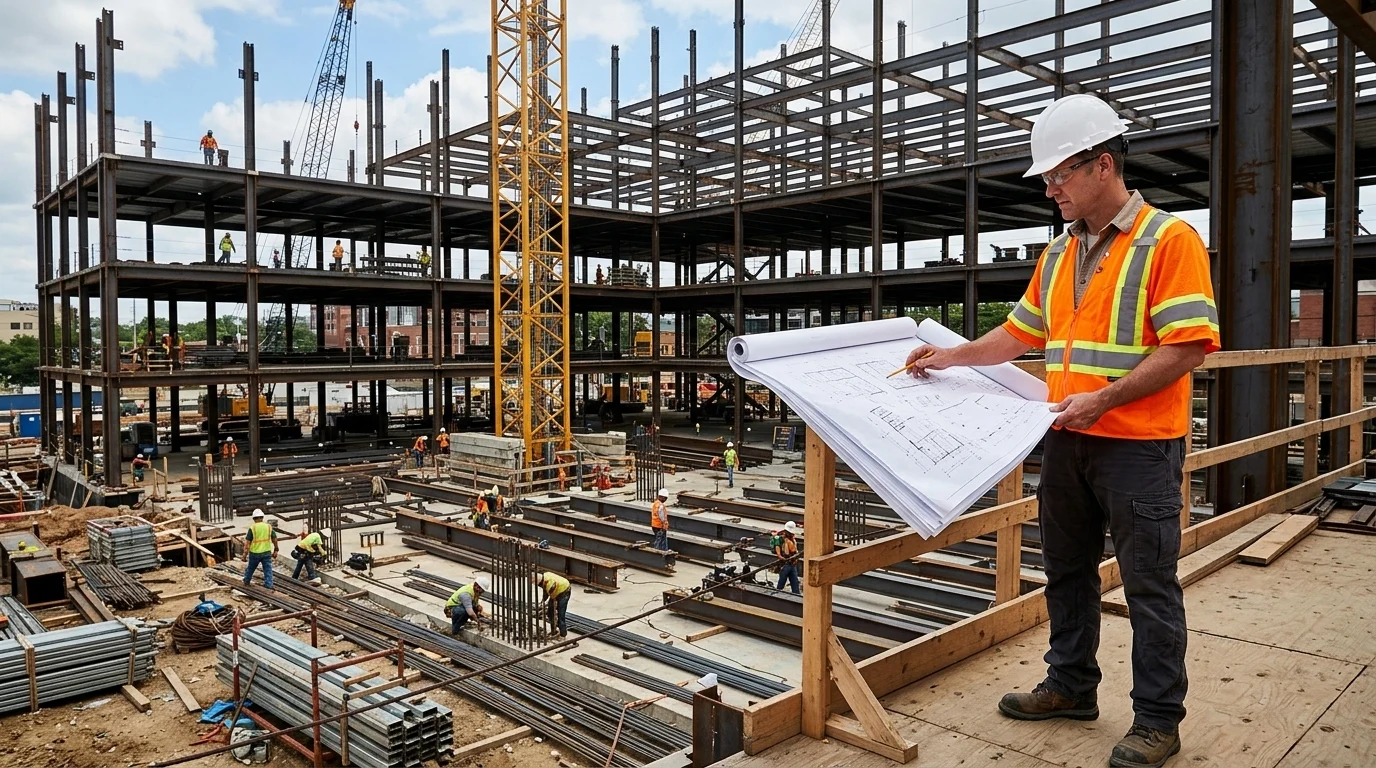
Construction Business Loans: Funding Options for Contractors and Builders
Fundivi
AI-powered underwriting with no minimum credit score requirement. Decisions issued in as little as 3 hours based entirely on monthly business revenue, with a rate-match guarantee and zero paperwork.
Construction is one of the few industries where being profitable on paper and having cash in the bank are routinely two very different things. A contractor can have a full pipeline of profitable, signed contracts and still struggle to make payroll, because the cash from those contracts often will not arrive for thirty, sixty, or ninety days after the work is completed. This gap between earning revenue and actually collecting it is the defining financial challenge of the construction industry, and it shapes which financing tools genuinely help and which ones just add another obligation to juggle.
This guide covers the specific cash flow pattern construction businesses deal with, the financing options built to address it, and how bonding fits into the broader picture.
The Cash Flow Pattern Unique to Construction
Most construction work follows a pay when paid or pay after milestone structure, where a contractor covers labor, materials, and subcontractor costs upfront, then bills the client or general contractor, then waits for that invoice to clear. On a larger commercial project, this cycle can stretch well past sixty days, during which the contractor still has ongoing payroll, material costs on the next phase, and often multiple projects at different stages simultaneously.
This pattern means a construction business can be growing quickly, taking on more and better contracts, and still face its tightest cash position exactly when things are going well, since growth means more projects in the pipeline all waiting on payment at once. Financing built for this industry needs to address that timing gap specifically, not just provide a lump sum for general use.
Financing Options Built for This Pattern
Invoice factoring for pay when paid gaps
Invoice factoring is particularly well suited to construction, since it directly addresses the gap between completing work and getting paid for it. A factoring company advances a percentage of an approved invoice, commonly 70 percent to 90 percent, immediately, with the remainder released once the client pays, minus a fee. For a contractor waiting on a general contractor’s payment cycle, this can mean covering next week’s payroll without waiting for an invoice that is still forty five days from clearing.
Equipment financing for heavy machinery
Construction is one of the most equipment intensive industries in small business lending, and financing for excavators, loaders, trucks, and other heavy machinery is a well established category with lenders who specialize in exactly this kind of collateral. Because this equipment holds substantial resale value, financing terms are often more favorable than an unsecured alternative, and terms are typically matched to the equipment’s useful life, often five to ten years for heavier machinery.
Lines of credit for job to job flexibility
A line of credit gives a construction business a standing buffer to draw on between projects or to cover the material costs of a new job before the first payment milestone arrives. Because interest accrues only on the amount drawn, a line that sits mostly unused between big draws costs relatively little while remaining available exactly when the timing gap between projects creates pressure.
SBA loans for larger, planned growth
For a construction business investing in a larger equipment fleet, a new facility, or significant working capital to support a major expansion, an SBA backed loan often provides the most favorable long term cost, provided the business has the operating history and documentation to support the longer approval process. This tends to fit planned growth better than the immediate cash flow gaps invoice factoring or a line of credit are built to solve.
Bonding and Financing Are Not the Same Thing
Contractors new to larger commercial or government work sometimes confuse surety bonding with financing, but they solve different problems. A performance bond or payment bond is a guarantee to the project owner that the work will be completed and subcontractors and suppliers will be paid, backed by a surety company, not a source of working capital for the contractor itself. Being bonded can actually make it easier to win larger contracts, but it does not solve the cash flow gap while waiting for those contracts to pay out, which is exactly where financing options like invoice factoring or a line of credit come in as a complement to bonding rather than a substitute for it.
Typical Costs in Construction Financing
Costs vary by product and by how established the contractor is. Invoice factoring fees commonly run 1 percent to 5 percent per 30 day period the invoice remains outstanding, which compounds if a client is slow to pay, making the client’s payment reliability almost as important as your own financial profile when evaluating this option. Equipment financing for heavy machinery commonly carries rates from 7 percent to 20 percent annually, reflecting the strong collateral value of construction equipment. Lines of credit for construction businesses typically range from 10 percent to 26 percent on the drawn balance, depending on the business’s financial profile and banking relationship.
What Strengthens a Construction Financing Application
A documented backlog of signed contracts or a clear pipeline of upcoming work demonstrates predictable future revenue in an industry where lenders know cash flow can be lumpy. Clean documentation of accounts receivable, showing which clients are current and which are past due, matters enormously for invoice factoring specifically, since the factor is really underwriting your client’s ability to pay, not just your own business. A track record of completing projects on time and within budget, while harder to document formally, often comes through in references and past project history that some lenders will ask about directly for larger financing requests.
Common Mistakes in Construction Financing
Relying on a fixed monthly payment product to cover a cash flow gap that is actually tied to project timing, rather than choosing a product like factoring or a line of credit that flexes with when money actually arrives, is one of the more common mismatches in this industry. Financing equipment with a term longer than the equipment’s realistic useful life leaves a contractor still paying for a machine that has already been sold, traded in, or worn out. Underestimating how quickly cash gets absorbed across multiple simultaneous projects, especially during a growth period, catches many contractors off guard exactly when the business is otherwise doing well.
Running the Numbers Before You Commit
Before choosing a financing path, it helps to see the real cost side by side, especially when comparing something like invoice factoring against a line of credit for the same underlying cash flow gap. Our business loan calculators let you compare the actual numbers across these structures so you can choose based on your specific situation rather than a general assumption about which product is cheaper.
Frequently Asked Questions
Can a new construction business get financing without an established track record?
It is more difficult, but not impossible, particularly for equipment financing, where the equipment itself provides collateral that offsets some of the lender’s risk from a shorter operating history. Invoice factoring can also be more accessible to newer contractors since it leans heavily on the client’s creditworthiness rather than the contractor’s own history, provided the client is a solid payer.
Does invoice factoring work for residential contractors, or only commercial and government work?
Factoring is most commonly used for commercial and government contracting, where formal invoicing and longer net payment terms are standard practice. Residential work, which is often paid more quickly and directly by homeowners, generally has less need for factoring, though it can still apply in situations involving larger residential projects billed through a general contractor or property management company on similar payment terms.
How does a lender evaluate a construction business differently from other industries?
Lenders familiar with construction typically look closely at accounts receivable aging, the mix of project types and clients, and how concentrated revenue is among a small number of large clients versus spread across many smaller ones. A heavy reliance on one or two major clients can be viewed as a risk factor even if overall revenue looks strong, since losing a single relationship could significantly affect cash flow.
Is equipment financing available for used or older heavy machinery?
Yes, though terms are generally less favorable than for newer equipment, often with a shorter maximum term, a higher rate, or a larger required down payment, since resale value and remaining useful life are harder to predict confidently for older machinery. Documentation on the equipment’s maintenance history and condition can help support better terms when financing used equipment.
What happens to financing obligations if a major project gets delayed or canceled?
This depends heavily on the specific financing structure. A fixed term loan payment continues regardless of project timing, which is why matching financing type to the actual shape of your cash flow matters so much in this industry. Revenue tied products, like certain lines of credit or factoring arrangements, are generally more resilient to a single delayed project, though a canceled project that was factored can create its own complications depending on the agreement, which is worth understanding fully before signing.
Should a contractor prioritize bonding capacity or financing access when trying to grow?
Both typically matter for meaningful growth into larger contracts, and they work together rather than substituting for each other. Bonding capacity determines what size and type of contracts you can even bid on, while financing access determines whether you can actually manage the cash flow required to execute those contracts once won. A contractor focused only on increasing bonding capacity without a plan for the working capital gap that comes with larger projects often finds the growth harder to sustain than expected.